


February - March 2025
Role: UX Designer
Role: UX Designer
ClassDojo is a classroom management platform used by millions of teachers to track student behavior and communicate with parents. As a part-time grade school teacher, I used ClassDojo regularly and quickly noticed recurring friction across all user groups. Parents often felt overwhelmed and confused, teachers expressed frustration with limited flexibility, and students became demotivated by the way progress was represented.
This project reimagines ClassDojo as a platform that prioritizes growth-oriented learning, clearer communication, and intrinsic motivation - while still preserving the structure and efficiency teachers rely on.
The Process
The Process
The Process
The Process
I structured my design process into three core phases:


Empathize
Empathize
Empathize
Empathize
To understand the real impact of ClassDojo in the classroom, I began with primary research, sending parents of students in my classes surveys about their experiences using the platform.


Key insights from parent surveys:
Parents often miss important announcements
Parents feel overloaded by the volume of information
Parents dislike the negative point system
Parents often miss important announcements
Parents feel overloaded by the volume of information
Parents dislike the negative point system
To broaden these findings, I conducted secondary research by analyzing online forums, App Store reviews, and Reddit threads to capture perspectives from teachers and students as well.
Key insights from secondary research:
Teachers view the point system as overly rigid and binary
Students become unmotivated and lack a growth mindset
Parents struggle to quickly access critical information
Teachers view the point system as overly rigid and binary
Students become unmotivated and lack a growth mindset
Parents struggle to quickly access critical information
This phase revealed a shared pain point: the platform communicates a lot, but not always effectively.
Conceptualize
Conceptualize
Conceptualize
Conceptualize
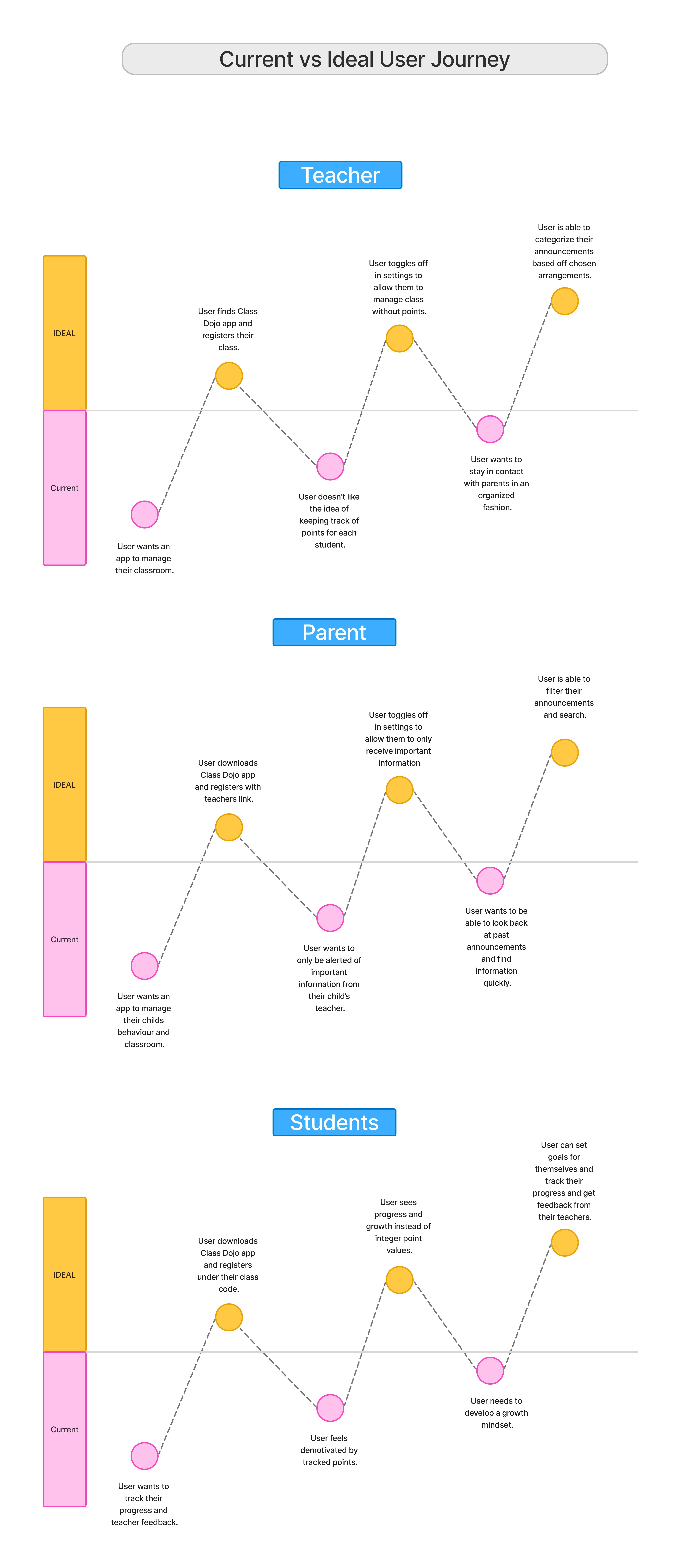
Current vs. Ideal User Journey


I mapped current and ideal user journeys for students, teachers, and parents to identify where frustration peaks and where design interventions could reduce friction.
Affinity Mapping
Affinity Mapping
Affinity Mapping
Affinity Mapping


I then synthesized research findings using an affinity map to better understand patterns across all user groups.
Key insights across both methods:
Demotivation and unhealthy comparison (including bragging)
Important information mixed with low-value announcements
Negative perception of the point-based behavior system
Demotivation and unhealthy comparison (including bragging)
Important information mixed with low-value announcements
Negative perception of the point-based behavior system
These insights helped narrow the redesign focus to clarity, flexibility, and motivation.
Design
Design
Design
Design
Below are some feature updates made:
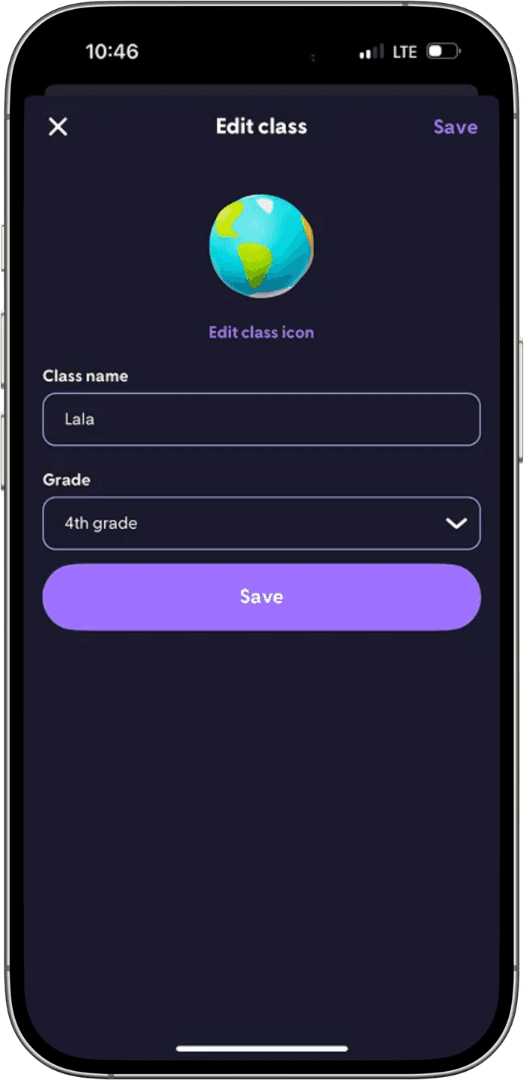
Flexible Point System


Teachers can toggle the point system on or off, allowing them to decide when behavioral tracking is helpful and when it isn’t. This flexibility supports diverse teaching styles and reduces over-reliance on numerical feedback.
Smarter Parent Communication


To combat information overload, the redesign introduces:
Categorized announcements
Search and filtering tools
Smart alerts that surface only high-priority updates
Categorized announcements
Search and filtering tools
Smart alerts that surface only high-priority updates
This helps parents stay informed without feeling overwhelmed.
Growth-Centered Student Experience


Instead of emphasizing point totals, the student view highlights:
Visualized progress over time
Reflection and self-assessment tools
Goal-setting features that encourage ownership of learning
Visualized progress over time
Reflection and self-assessment tools
Goal-setting features that encourage ownership of learning
Together, these features reinforce a growth mindset rather than competition.
The Impact
The Impact
The Impact
The Impact
The redesigned experience creates a more intentional and humane classroom ecosystem:
Increased student engagement and motivation
Clearer, more actionable communication for parents
Greater flexibility and confidence for teachers
Increased student engagement and motivation
Clearer, more actionable communication for parents
Greater flexibility and confidence for teachers
By reframing how success is represented, the platform supports learning as a continuous process, not a score.
Reflection
Reflection
Reflection
Reflection
This project reinforced how deeply design decisions can shape motivation, self-perception, and classroom culture - especially in educational tools used daily by children. Designing from lived experience, supported by user research, this taught me the importance of balancing structure with empathy and flexibility. Small interaction changes can have a significant impact on how students, parents, and teachers experience learning together.